
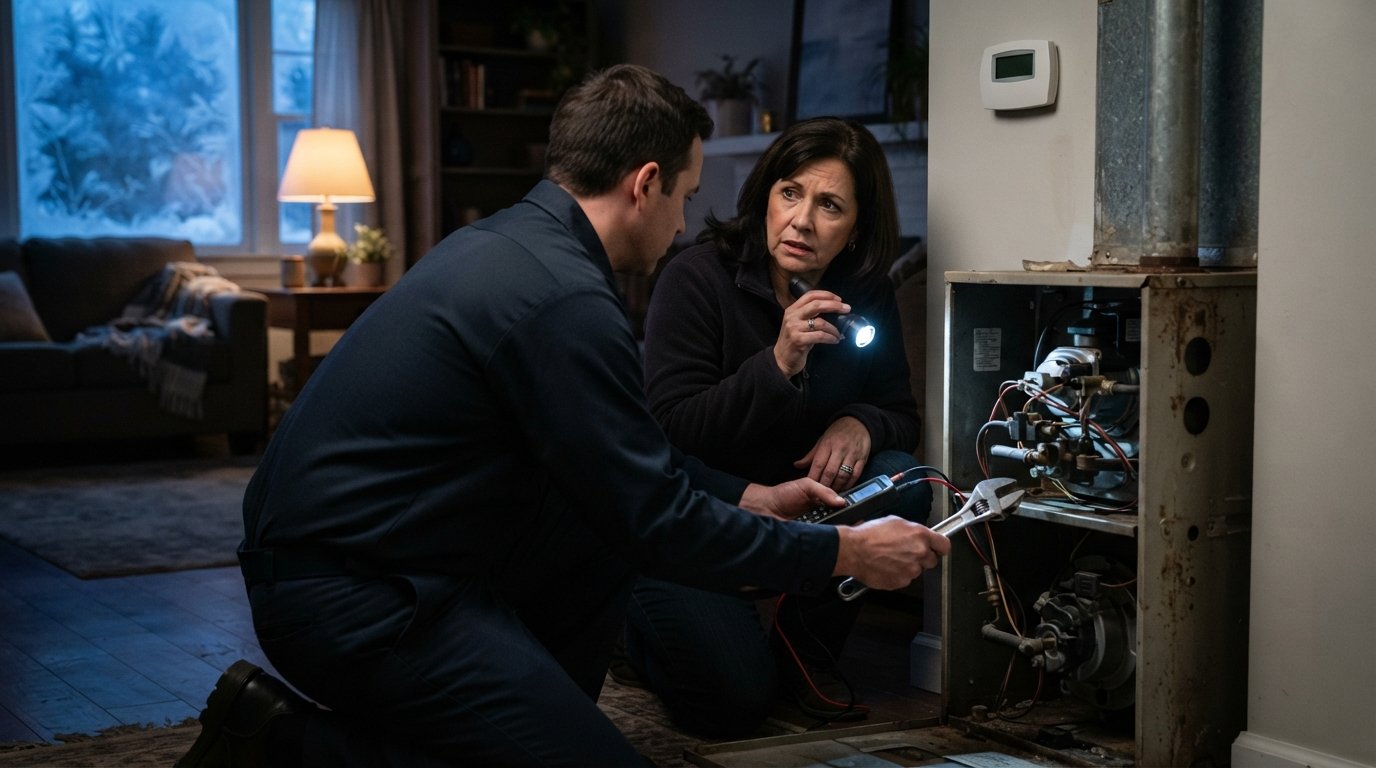
Emergency Cash for a Sudden Appliance or HVAC Breakdown
Get emergency cash for a sudden appliance or HVAC breakdown. Compare repair costs, lender terms, and payment plans to borrow only what you need.

Your furnace dies on the coldest night of January. Your refrigerator stops cooling two days before a family gathering. Your air conditioner quits during a July heat wave. These moments are not just inconvenient; they are financially stressful because they arrive without warning and demand immediate action. You need emergency cash for a sudden appliance or HVAC breakdown, and you need it fast. But before you panic or reach for the first loan offer you see, it helps to understand your options, the typical costs, and how to borrow responsibly.
At AdvanceCash.com, we connect U.S. consumers with independent third-party lenders who may offer short-term loans, personal loans, and installment loans. We are not a lender, and we do not make credit decisions. Our role is to help you submit one secure request and potentially receive loan offers from lenders in our network. This article will walk you through the cost ranges, the repair-versus-replace decision, how to request lender options quickly, and how to avoid over-borrowing when a payment plan with the repair company might be a better fit.
Typical Costs for Appliance and HVAC Repairs or Replacements
Before you borrow a single dollar, you need a realistic picture of what the repair or replacement will cost. Prices vary by region, equipment type, and whether you need emergency service. The table below offers broad ranges based on common U.S. residential scenarios. These are estimates, and your actual quote may differ.
- Furnace repair: $150 to $600 for common fixes like igniter, blower motor, or thermostat replacement. Emergency or after-hours service may add $100 to $200.
- Furnace replacement: $3,000 to $7,000 for a standard unit, including installation. High-efficiency models can exceed $10,000.
- Central AC repair: $200 to $800 for refrigerant recharge, capacitor, or fan motor repairs. Compressor replacement can run $1,200 to $2,500.
- Central AC replacement: $4,000 to $8,000 for a complete system, including labor and materials.
- Refrigerator repair: $200 to $600 for common issues like a faulty compressor, evaporator fan, or control board.
- Refrigerator replacement: $800 to $3,000 for a standard model, with high-end or large-capacity units costing more.
These ranges show why a breakdown can feel like a crisis. A furnace replacement alone can exceed a month's rent or mortgage. That is why many consumers consider emergency cash for a sudden appliance or HVAC breakdown. But knowing the numbers helps you borrow only what you need, not a vague round figure that leaves you with unnecessary debt.
When you get a quote from a repair technician, ask for a written breakdown of parts and labor. Some companies offer flat-rate pricing, while others charge by the hour. If the repair cost is close to half the price of a new unit, replacement may be more cost-effective in the long run, especially if the equipment is older than 10 years or has a history of problems.
Repair Now or Finance a Replacement: How to Decide
The decision between repairing your current appliance or HVAC system and financing a full replacement is not always straightforward. You need to weigh the immediate cost against long-term reliability and efficiency. Here is a simple framework to help you decide.
- Assess the age of the equipment. Most furnaces last 15 to 20 years, air conditioners 10 to 15 years, and refrigerators 10 to 15 years. If your unit is near the end of its expected lifespan, a major repair may be throwing good money after bad.
- Compare repair cost to replacement cost. A common rule of thumb: if the repair costs more than 50 percent of a new unit's price, replacement is often the better financial choice.
- Consider efficiency gains. A new high-efficiency furnace or AC can lower your monthly utility bills by 20 percent or more. Over five to ten years, those savings can offset part of the purchase price.
- Factor in emergency financing costs. If you need emergency cash for a sudden appliance or HVAC breakdown, the interest and fees on a short-term loan add to the total cost. A replacement that seems affordable at $5,000 could cost significantly more if you finance it at a high annual percentage rate (APR).
Once you have a clear picture, you can decide whether to repair or replace. If you choose replacement, ask the contractor about in-house financing or payment plans. Many HVAC companies partner with third-party financing providers that offer promotional rates, such as 0 percent APR for 12 months. These can be cheaper than a payday loan or short-term cash advance, but they often require good credit. If you have less-than-perfect credit, you may need to explore other options.
If you decide to borrow, AdvanceCash.com can help you request loan options from multiple lenders with a single form. Our service is free, and you are under no obligation to accept any offer. You can learn more about how to get emergency cash advances in Houston by visiting our guide, which explains the process step by step.
How to Request Lender Options Quickly and Compare Repayment Terms
When you need emergency cash for a sudden appliance or HVAC breakdown, speed matters. But speed should not come at the expense of understanding the loan terms. Here is a practical approach to requesting and comparing lender options.
First, gather the information lenders typically request: your name, address, email, phone number, employment status, income, and bank account details. You may also need to provide a government-issued ID and proof of income. Having these ready will speed up the process.
Next, submit a single request through a loan-connecting service like AdvanceCash.com. We work with a network of independent third-party lenders who may present offers based on your information. You can complete the secure online form in minutes. After submission, you may receive loan offers from lenders, often within minutes. Review each offer carefully.
When comparing offers, focus on the following key terms:
- Annual percentage rate (APR): This includes both the interest rate and fees, giving you a true cost of borrowing. Compare APRs across offers.
- Repayment schedule: Short-term loans may require a single lump-sum payment, while installment loans have multiple payments over weeks or months. Choose a schedule that fits your budget.
- Fees and penalties: Look for origination fees, late payment fees, and prepayment penalties. Some lenders charge extra for early repayment, which can be frustrating if you receive a windfall.
- Total cost of the loan: Multiply the payment amount by the number of payments, then add fees. This gives you the total amount you will repay. Compare that to the repair cost to ensure it is manageable.
Do not accept the first offer without reviewing the terms. If an offer seems confusing, ask the lender for clarification before signing. Remember that AdvanceCash.com is not a lender and does not make credit decisions; all loan terms are set by the individual lender. We encourage you to read the lender's terms and conditions carefully.
If you have bad credit, you may still find options. Some lenders in our network specialize in working with borrowers who have less-than-perfect credit. However, be prepared for higher APRs and fees. Borrow only what you can afford to repay, and have a plan to repay the loan on time.
Avoiding Over-Borrowing When a Payment Plan with the Repair Company Exists
One of the most common mistakes consumers make during an emergency is borrowing more than they need. When you are stressed and facing a broken furnace or refrigerator, it is tempting to take the largest loan offered. But over-borrowing can lead to a cycle of debt that is hard to escape. Before you borrow, explore whether the repair company offers an in-house payment plan.
Many HVAC and appliance repair companies understand that emergencies are costly. Some offer payment plans directly, allowing you to spread the cost over several months without a credit check. These plans may have lower interest rates than short-term loans, or they may be interest-free for a promotional period. Ask the technician or customer service representative if financing is available.
If a payment plan is not available, or if you need additional funds to cover the repair, consider these strategies to avoid over-borrowing:
- Borrow only the repair cost, not extra. Resist the urge to add a cushion for other expenses. If you need cash for multiple bills, consider a separate loan or a budget review.
- Choose the shortest repayment term you can afford. A longer term lowers monthly payments but increases the total interest you pay. If you can repay in three months instead of twelve, do so.
- Use a payment plan with the repair company if offered. Compare the total cost of the payment plan to the total cost of a loan. Sometimes the repair company's plan is cheaper, even if it requires a down payment.
- Explore all alternatives before borrowing. Can you use a credit card with a low introductory APR? Do you have a small emergency fund? Can you negotiate a lower price with the repair company? Every dollar you do not borrow is a dollar you do not have to repay with interest.
If you decide that a short-term loan is your best option, use a service like StartPaydayLoan to compare offers from multiple lenders. StartPaydayLoan is a free online connection service that helps U.S. consumers find short-term and payday loan options. Visitors complete one simple request form and may be matched with third-party lenders in our network. StartPaydayLoan is not a lender and does not make credit decisions; any loan terms come directly from the lender. The site also publishes plain-language guides on borrowing and budgeting.
Remember that emergency cash for a sudden appliance or HVAC breakdown should be a temporary solution, not a long-term financial strategy. Borrow only what you need, repay on time, and build an emergency fund for future surprises. Even small savings can reduce your reliance on loans when the next breakdown occurs.
Building a Safety Net for Future Breakdowns
Once the immediate crisis is over, take steps to prepare for the next one. Home appliances and HVAC systems will eventually fail, but you can reduce the financial shock by planning ahead. Start a dedicated emergency fund for home repairs. Even setting aside $20 per week can add up to over $1,000 in a year. Keep the fund in a separate savings account so you are not tempted to spend it on non-emergencies.
Also, schedule regular maintenance for your HVAC system and appliances. A yearly tune-up for your furnace and air conditioner can catch small problems before they become expensive breakdowns. Clean your refrigerator coils, replace filters, and listen for unusual noises. These simple habits can extend the life of your equipment and reduce the likelihood of a sudden failure.
Finally, review your homeowner's insurance or home warranty policy. Some policies cover certain appliance breakdowns, though coverage varies widely. If you do not have a home warranty, consider whether one makes sense for your budget. A home warranty typically costs $300 to $600 per year and may cover repairs or replacements for major systems, but read the fine print for exclusions and service fees.
By combining a small emergency fund, regular maintenance, and a clear understanding of your financing options, you can handle the next appliance or HVAC breakdown with confidence. And if you do need emergency cash, you know where to turn: AdvanceCash.com connects you with independent third-party lenders who may offer the funds you need, often as soon as the next business day. StartPaydayLoan